Heavy rain produces the same scene in city after city: a flooded underpass, a parking garage with water up to the ramp ceiling, a street that has quietly become a river. For decades the response has looked the same too — crews standing in that water, dragging suction hoses, priming pumps, feeling their way across a surface they cannot see.
Floodwater is not just inconvenient. It hides open manhole covers, sharp debris, collapsed pavement and submerged live electrical equipment. The "Hippo" drainage robot was designed around a single principle: the machine goes into the water, the operator stays on dry ground.
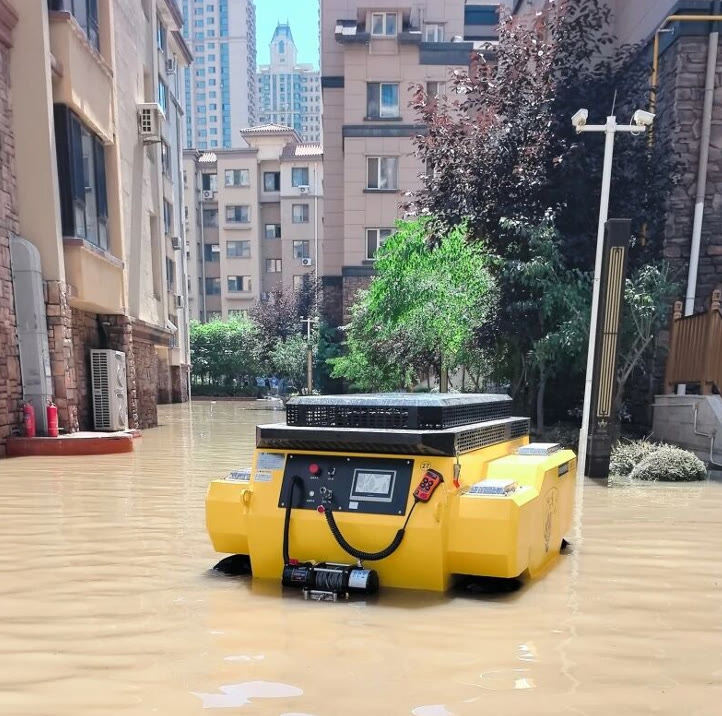
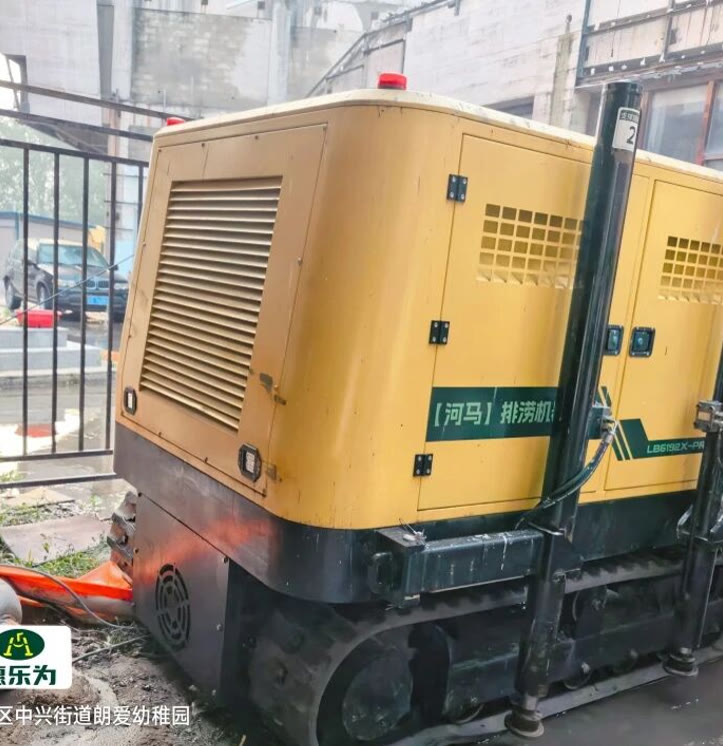
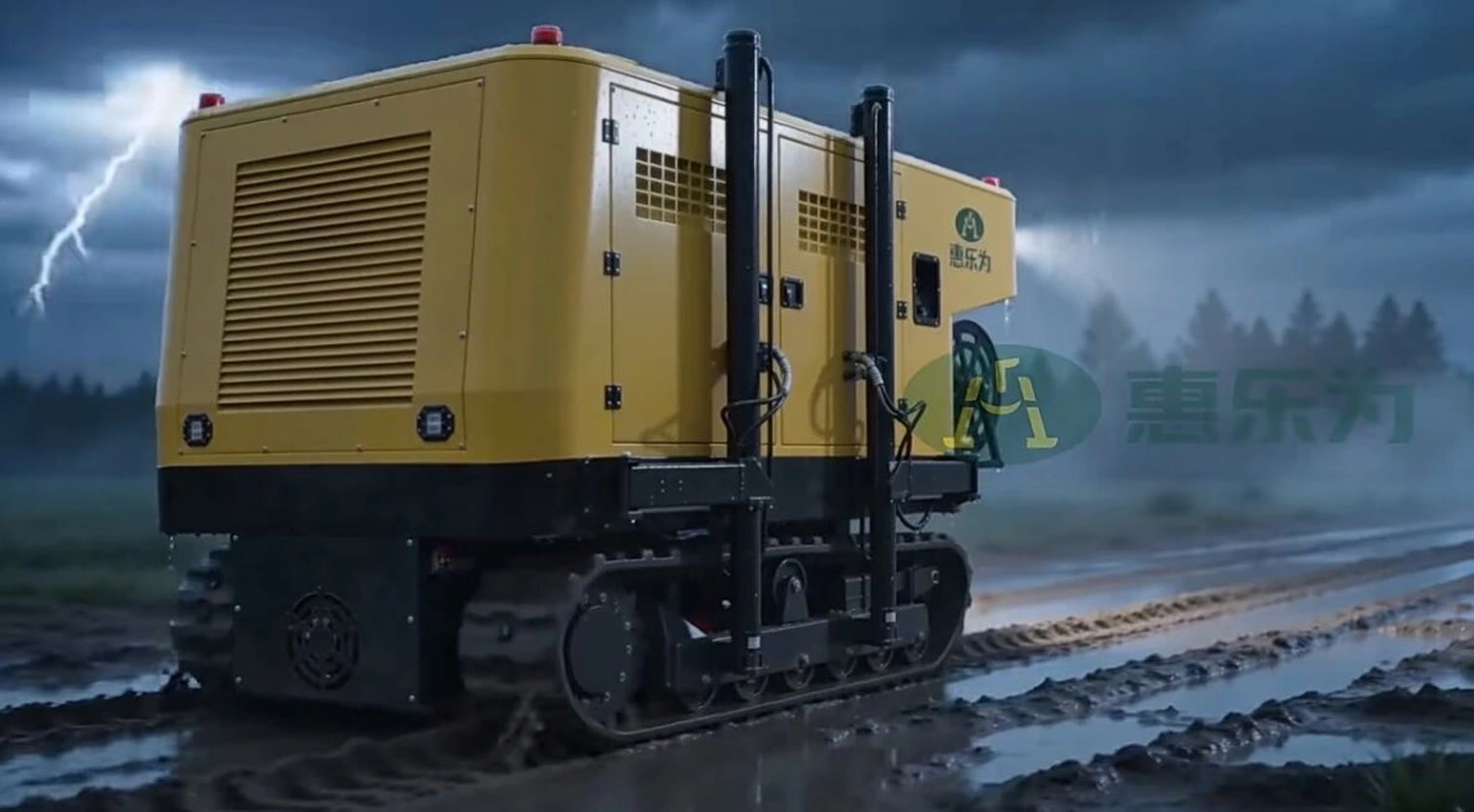
The Hippo is a tracked, remote-controlled drainage machine. Instead of a pump that has to be carried in by hand, set on a stable surface and wired up near the water, it is a self-propelled unit that drives itself into the flooded area, works there, and leaves the same way.
Four design decisions define how it behaves on site.
Full wireless remote control. The operator stands in a safe position — on the ramp, on the kerb, behind the perimeter tape — and drives the robot into the water from there. Nobody needs to wade in to position a suction line, and nobody needs to stand next to the machine while it runs.
Self-loading and unloading by remote. The unit loads and unloads itself from its transport vehicle under remote control, without a crane, forklift or extra rigging crew. It can be carried by an ordinary light truck, so a single machine can cover several flooded points in one shift instead of being tied to one location.
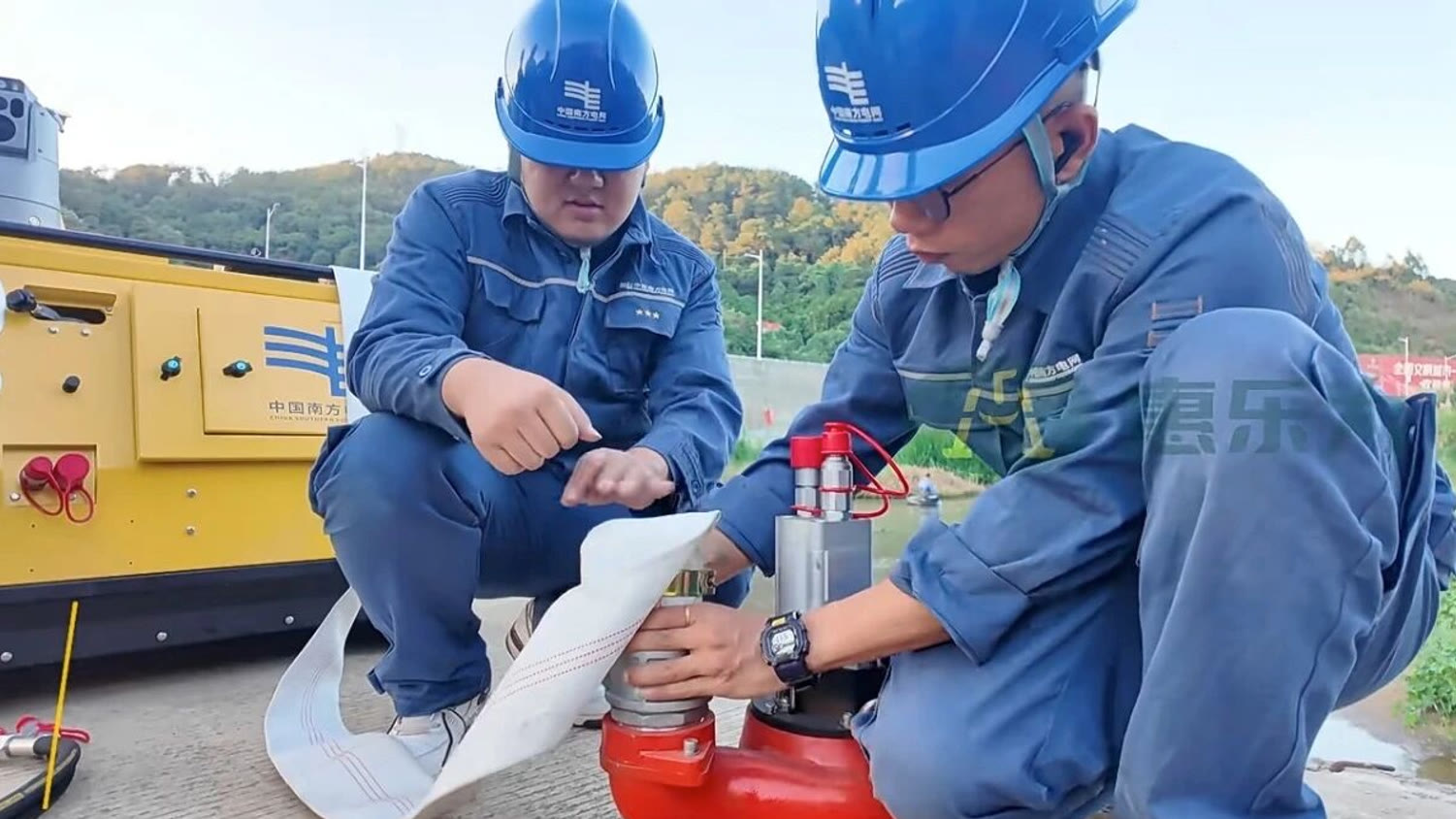
Hydraulic drive throughout. Both the running gear and the pumping system are driven hydraulically. There is no electrical drivetrain sitting in the water, which removes the two classic hazards of submerged pumping work: electric shock and short circuits. This is the single biggest safety difference between a hydraulic drainage robot and a submersible electric pump lowered into a flooded basement.
Tracked chassis. Tracks handle mud, ruts, broken kerbs, gravel and debris-strewn ground — the conditions that stop a wheeled trolley or make carrying a portable pump physically exhausting.
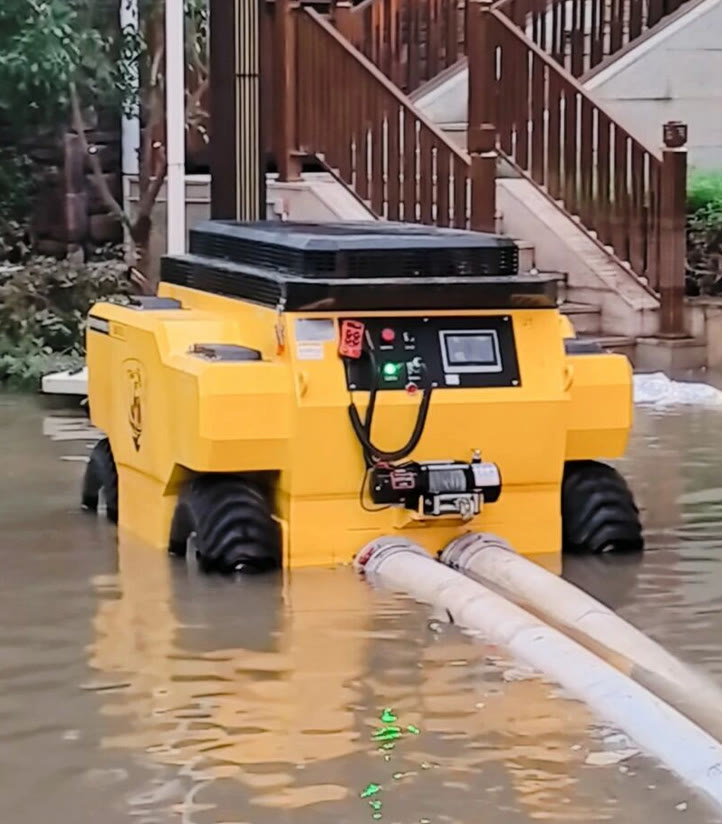
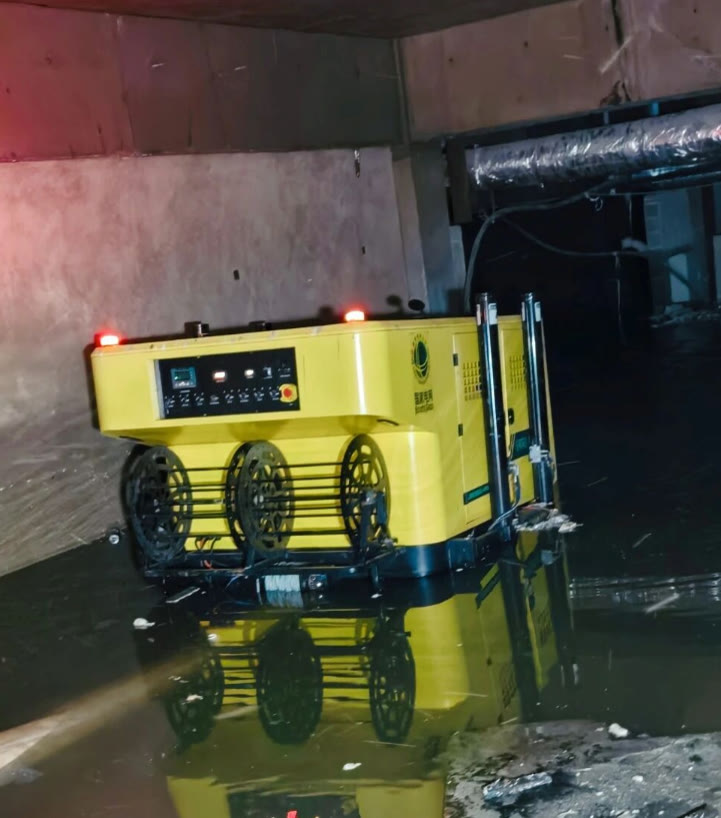
The measurable gain is not only pumping performance. It is the number of people who never have to enter the water, and the minutes saved every time the machine has to be moved from one site to another.
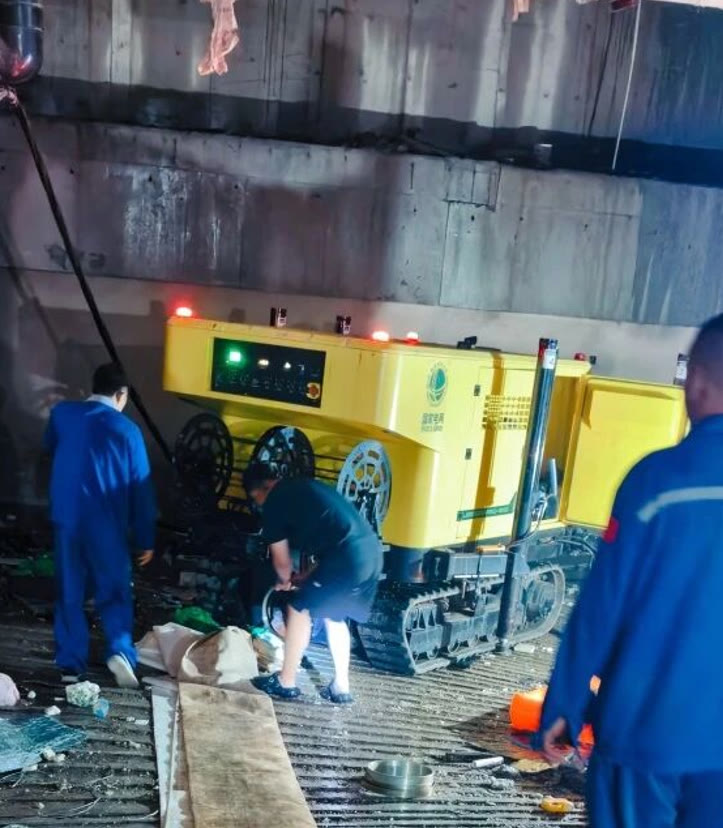
Flooding is not one problem. A shallow flooded garage and a deep excavation full of water demand different machines, and a range with three broad configurations covers most sites:
| Site condition | Best-fit configuration | Why it matters |
|---|---|---|
| Shallow water, tight indoor spaces, low-clearance garages | Lightweight, compact unit | Fits through doorways and down ramps; low ground pressure |
| Large standing volume, short discharge distance | High-flow unit | Clears volume faster when lift is not the limiting factor |
| Deep water, long hose runs, water that must be pushed uphill | High-head unit | Keeps flow rate up against the resistance of lift and length |
| Repeated moves between scattered flooded points | Any variant on a light-truck transport setup | Fast self-loading matters more than peak performance |
This table is general selection guidance, not a specification sheet. Final machine selection depends on the actual water volume, discharge distance and the site's access route.
| Factor | Portable pumps moved by hand | Truck-mounted pump with a crane | Tracked remote drainage robot |
|---|---|---|---|
| Operator enters the water | Frequently | Sometimes | No |
| Loading / unloading | Manual carrying | Crane or forklift | Self-loading by remote |
| Ground conditions | Paved, firm surfaces | Firm ground for the truck | Mud, ruts, rubble, steps |
| Electrical risk in water | Submersible cable in the water | Diesel-driven, still placed by hand | Fully hydraulic — no electrical drivetrain in the water |
| Moving between sites | Slow, labour-heavy | Limited by crane availability | Drive on, drive off, move on |
| Visibility for the crew | Standing in opaque water | Working at the water's edge | Watching from dry ground |
Consider a basement holding roughly 3,000 m³ of standing water. If one pump set moves about 500 m³ per hour — a worked example figure used only to illustrate the arithmetic, not a rating of any specific machine — the water is gone in about six hours of pumping.
Those six hours are not the problem. The problem is everything that happens before pumping starts. Hand-carried pumps have to be manhandled in one unit at a time and positioned in the water; crane-equipped trucks have to find firm ground and wait their turn. Hours lost on setup are hours spent with water still rising. That is why a machine that unloads itself and drives straight into the flooded zone changes the outcome of the shift even before the first litre is pumped.
Can it work inside a flooded underground garage?
Yes — that is one of its primary applications. Compact variants are chosen where headroom and door widths are limited, and the operator works from the ramp or the entrance, outside the water.
What if the water is full of mud, sand or debris?
Tracked chassis cope with the ground, and the pump end is selected to suit the solids present. Debris in the water is exactly the reason a remote-controlled machine is preferable to sending a person in to position a suction line by hand.
Does it need a crane to move between sites?
No. It loads and unloads itself under remote control and can be carried by a light truck, so a crew can move it without waiting for lifting equipment.
Is it safe near live electrical equipment?
The machine's drive and drainage systems are hydraulically powered, so there is no electrical drivetrain immersed in the water. That removes the shock and short-circuit hazards associated with submersible electric pumps. Live installations at the site should still be isolated and treated as hazardous by the operating crew.
How many people are needed to run it?
The design intent is a minimal crew: one operator on remote control, plus personnel handling the discharge hose and traffic or site safety.
Which variant should we order?
It depends on three numbers: the volume of water to be moved, the discharge distance, and the lift required. Share those three figures and the correct configuration follows from them.
Flood response is judged by two things: how fast the water goes down, and whether everyone who went out to the job comes home.
The Hippo drainage robot is not only about moving water faster — it is about removing the most dangerous step in the whole operation. Nobody wades in to set a pump, nobody stands in opaque water beside machinery, and nobody waits for a crane while the water keeps rising. Three configurations — lightweight, high-flow and high-head — cover the range of urban flooding sites, from a single garage ramp to a street-wide emergency.
When the next storm arrives, the crew can start work from dry ground.
 NO.2 XIAHE ROAD GANZHE STREET,MINHOU COUNTY,FUZHOU FUJIAN CHINA
من فضلك تابع القراءة، ابق على اطلاع، اشترك، ونحن نرحب بك لتخبرنا برأيك.


حقوق النشر
@ 2026 LEHUI (FUZHOU) INTELLIGENT EQUIPMENT MANUFACTURING CO., LTD كل الحقوق محفوظة.
 الشبكة المدعومة
 العربية
 English
 français
 Deutsch
 italiano
 русский
 español
 português
 Melayu
 Indonesia
